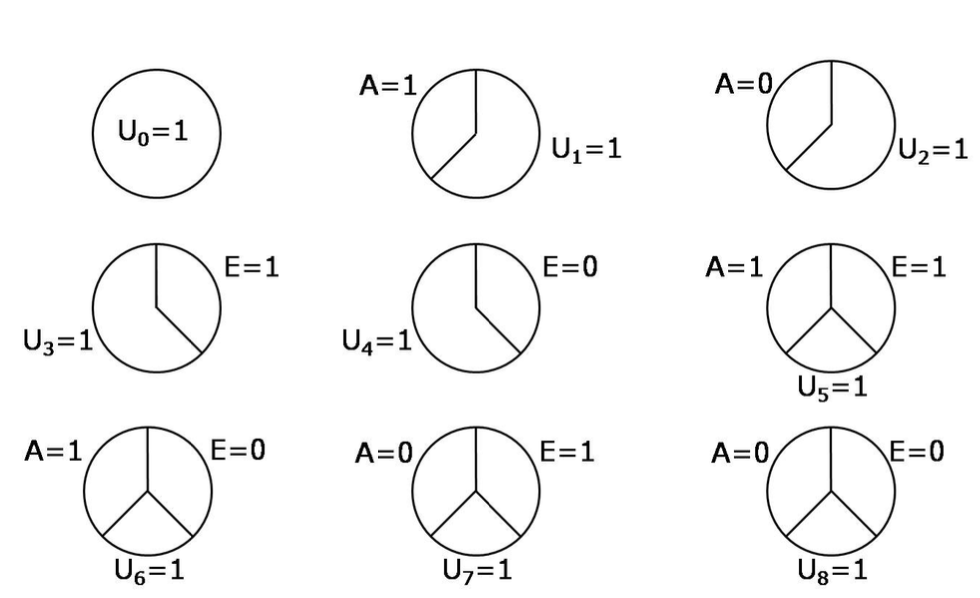
class: center, middle, inverse, title-slide # Interaction ## What If: Chapter 5 ### Elena Dudukina ### 2020-12-08 --- <style>.shareagain-bar { --shareagain-foreground: rgb(255, 255, 255); --shareagain-background: rgba(0, 0, 0, 0.5); --shareagain-facebook: none; --shareagain-linkedin: none; --shareagain-pinterest: none; --shareagain-pocket: none; --shareagain-reddit: none; }</style> # Definition of the interaction * The joint intervention of two or more treatments - A: heart transplant - E: vitamins - 4 treatment combinations: `\(Y^{a=0, e=0}, Y^{a=1, e=0}, Y^{a=0, e=1}, Y^{a=1, e=1}\)` - Effect measured on the absolute scale: interaction on the additive scale `\(Pr[Y^{a=1, e=1}=1]-Pr[Y^{a=0, e=1}=1] \neq Pr[Y^{a=1, e=0}=1]-Pr[Y^{a=0, e=0}=1]\)` - Example: - the causal risk difference for receiving the transplant when everyone gets vitamins `\(Pr[Y^{a=1, e=1}=1]-Pr[Y^{a=0, e=1}=1]\)`=0.1 and the causal risk difference for receiving the transplant when no one gets vitamins `\(Pr[Y^{a=1, e=0}=1]-Pr[Y^{a=0, e=0}=1]\)`=0.2 - 0.1 `\(\neq\)` 0.2 - there is an interaction on the additive scale between treatments A and E - same implied for the second exposure E: `\(Pr[Y^{a=1, e=1}=1]-Pr[Y^{a=1, e=0}=1] \neq Pr[Y^{a=0, e=1}=1]-Pr[Y^{a=0, e=0}=1]\)` - both exposures have an equal status and require the same assumptions - in contrast to the effect measure modification, which deals with the causal effect of only one exposure and the causal contrast is defined in terms of the P.O. `\(Y^a\)`, interaction deals with **joint** effect of several exposures and the causal contrast defined in terms of the P.O. `\(Y^{a, e}\)` --- # Technical point 5.1 - Working with the interaction equation: * `\(Pr[Y^{a=1, e=1}=1]-Pr[Y^{a=1, e=0}=1] \neq Pr[Y^{a=0, e=1}=1]-Pr[Y^{a=0, e=0}=1]\)` --> * `\(Pr[Y^{a=1, e=1}=1] \neq {Pr[Y^{a=0, e=1}=1]-Pr[Y^{a=0, e=0}=1]}+Pr[Y^{a=1, e=0}=1]\)` --> * substruct `\(Pr[Y^{a=0, e=0}=1]\)`: * `\(Pr[Y^{a=1, e=1}=1] - Pr[Y^{a=0, e=0}=1] \neq \\{Pr[Y^{a=0, e=1}=1]-Pr[Y^{a=0, e=0}=1]}+Pr[Y^{a=1, e=0}=1] - Pr[Y^{a=0, e=0}=1]\)` - Multiplicative scale: * `\(\frac{Pr[Y^{a=1, e=1}=1]}{Pr[Y^{a=0, e=0}=1]} \neq \frac{Pr[Y^{a=1, e=0}=1]}{Pr[Y^{a=0, e=0}=1]} * \frac{Pr[Y^{a=0, e=1}=1]}{Pr[Y^{a=0, e=0}=1]}\)` --- # Identifying interaction - Exchangeability, positivity, and consistency for both exposures - Imagine E was assigned marginally (unconditionally) at random `\(Pr[Y^{a=1, e=1}=1]\)` under exchangeability becomes `\(Pr[Y^{a=1}=1|E=1]\)` * For the full equation: `\(Pr[Y^{a=1, e=1}=1]-Pr[Y^{a=0, e=1}=1] \neq Pr[Y^{a=1, e=0}=1]-Pr[Y^{a=0, e=0}=1]\)` * under exchangeability: * `\(Pr[Y^{a=1}=1|E=1]-Pr[Y^{a=0}=1|E=1] \neq Pr[Y^{a=1}=1|E=0]-Pr[Y^{a=0}=1|E=0]\)` - When treatment E is randomly assigned, the interaction and effect modification coincide --- - A and E are **joint** inrervention --> combined treatment AE with four possible levels (11, 01, 10, 00) - Identification of the causal effect of one treatment AE --- # Counterfactual response types | Type | `\(Y^{a=0}\)` | `\(Y^{a=1}\)` | |------:|:-----|---------| | Doomed | 1 | 1 | | Helped | 1 | 0 | | Hurt | 0 | 1 | | Immune | 0 | 0 | --- **Counterfactual response types** ``` ## # A tibble: 20 x 4 ## greek Y_a0 Y_a1 type ## <chr> <dbl> <dbl> <chr> ## 1 Demeter 0 0 immune ## 2 Hades 0 0 immune ## 3 Hestia 0 0 immune ## 4 Hera 0 0 immune ## 5 Rheia 0 1 hurt ## 6 Zeus 0 1 hurt ## 7 Leto 0 1 hurt ## 8 Hephaestus 0 1 hurt ## 9 Aphrodite 0 1 hurt ## 10 Cyclope 0 1 hurt ## 11 Kronos 1 0 helped ## 12 Poseidon 1 0 helped ## 13 Apollo 1 0 helped ## 14 Hermes 1 0 helped ## 15 Hebe 1 0 helped ## 16 Dionysus 1 0 helped ## 17 Artemis 1 1 doomed ## 18 Ares 1 1 doomed ## 19 Athena 1 1 doomed ## 20 Persephone 1 1 doomed ``` --- **Counterfactual response types** <table> <thead> <tr> <th style="text-align:right;"> type </th> <th style="text-align:right;"> Y_a=1, e=1 </th> <th style="text-align:right;"> Y_a=0, e=1 </th> <th style="text-align:right;"> Y_a=1, e=0 </th> <th style="text-align:right;"> Y_a=0, e=0 </th> </tr> </thead> <tbody> <tr> <td style="text-align:right;"> 1 </td> <td style="text-align:right;"> 1 </td> <td style="text-align:right;"> 1 </td> <td style="text-align:right;"> 1 </td> <td style="text-align:right;"> 1 </td> </tr> <tr> <td style="text-align:right;"> 2 </td> <td style="text-align:right;"> 1 </td> <td style="text-align:right;"> 1 </td> <td style="text-align:right;"> 1 </td> <td style="text-align:right;"> 0 </td> </tr> <tr> <td style="text-align:right;"> 3 </td> <td style="text-align:right;"> 1 </td> <td style="text-align:right;"> 1 </td> <td style="text-align:right;"> 0 </td> <td style="text-align:right;"> 1 </td> </tr> <tr> <td style="text-align:right;"> 4 </td> <td style="text-align:right;"> 1 </td> <td style="text-align:right;"> 1 </td> <td style="text-align:right;"> 0 </td> <td style="text-align:right;"> 0 </td> </tr> <tr> <td style="text-align:right;"> 5 </td> <td style="text-align:right;"> 1 </td> <td style="text-align:right;"> 0 </td> <td style="text-align:right;"> 1 </td> <td style="text-align:right;"> 1 </td> </tr> <tr> <td style="text-align:right;"> 6 </td> <td style="text-align:right;"> 1 </td> <td style="text-align:right;"> 0 </td> <td style="text-align:right;"> 1 </td> <td style="text-align:right;"> 0 </td> </tr> <tr> <td style="text-align:right;"> 7 </td> <td style="text-align:right;"> 1 </td> <td style="text-align:right;"> 0 </td> <td style="text-align:right;"> 0 </td> <td style="text-align:right;"> 1 </td> </tr> <tr> <td style="text-align:right;"> 8 </td> <td style="text-align:right;"> 1 </td> <td style="text-align:right;"> 0 </td> <td style="text-align:right;"> 0 </td> <td style="text-align:right;"> 0 </td> </tr> <tr> <td style="text-align:right;"> 9 </td> <td style="text-align:right;"> 0 </td> <td style="text-align:right;"> 1 </td> <td style="text-align:right;"> 1 </td> <td style="text-align:right;"> 1 </td> </tr> <tr> <td style="text-align:right;"> 10 </td> <td style="text-align:right;"> 0 </td> <td style="text-align:right;"> 1 </td> <td style="text-align:right;"> 1 </td> <td style="text-align:right;"> 0 </td> </tr> <tr> <td style="text-align:right;"> 11 </td> <td style="text-align:right;"> 0 </td> <td style="text-align:right;"> 1 </td> <td style="text-align:right;"> 0 </td> <td style="text-align:right;"> 1 </td> </tr> <tr> <td style="text-align:right;"> 12 </td> <td style="text-align:right;"> 0 </td> <td style="text-align:right;"> 1 </td> <td style="text-align:right;"> 0 </td> <td style="text-align:right;"> 0 </td> </tr> <tr> <td style="text-align:right;"> 13 </td> <td style="text-align:right;"> 0 </td> <td style="text-align:right;"> 0 </td> <td style="text-align:right;"> 1 </td> <td style="text-align:right;"> 1 </td> </tr> <tr> <td style="text-align:right;"> 14 </td> <td style="text-align:right;"> 0 </td> <td style="text-align:right;"> 0 </td> <td style="text-align:right;"> 1 </td> <td style="text-align:right;"> 0 </td> </tr> <tr> <td style="text-align:right;"> 15 </td> <td style="text-align:right;"> 0 </td> <td style="text-align:right;"> 0 </td> <td style="text-align:right;"> 0 </td> <td style="text-align:right;"> 1 </td> </tr> <tr> <td style="text-align:right;"> 16 </td> <td style="text-align:right;"> 0 </td> <td style="text-align:right;"> 0 </td> <td style="text-align:right;"> 0 </td> <td style="text-align:right;"> 0 </td> </tr> </tbody> </table> --- # Counterfactual response types - Type 1 dies regardless of the treatments received - Type 16 is immune <table> <thead> <tr> <th style="text-align:right;"> type </th> <th style="text-align:right;"> Y_a=1, e=1 </th> <th style="text-align:right;"> Y_a=0, e=1 </th> <th style="text-align:right;"> Y_a=1, e=0 </th> <th style="text-align:right;"> Y_a=0, e=0 </th> </tr> </thead> <tbody> <tr> <td style="text-align:right;"> 1 </td> <td style="text-align:right;"> 1 </td> <td style="text-align:right;"> 1 </td> <td style="text-align:right;"> 1 </td> <td style="text-align:right;"> 1 </td> </tr> <tr> <td style="text-align:right;"> 16 </td> <td style="text-align:right;"> 0 </td> <td style="text-align:right;"> 0 </td> <td style="text-align:right;"> 0 </td> <td style="text-align:right;"> 0 </td> </tr> </tbody> </table> --- - Type 4 dies if treated with E regardless of A - Type 13 dies if NOT treated with E regardless of A - Type 6 dies if treated with A regardless of E - Type 11 dies if NOT treated with A regardless of E <table> <thead> <tr> <th style="text-align:right;"> type </th> <th style="text-align:right;"> Y_a=1, e=1 </th> <th style="text-align:right;"> Y_a=0, e=1 </th> <th style="text-align:right;"> Y_a=1, e=0 </th> <th style="text-align:right;"> Y_a=0, e=0 </th> </tr> </thead> <tbody> <tr> <td style="text-align:right;"> 4 </td> <td style="text-align:right;"> 1 </td> <td style="text-align:right;"> 1 </td> <td style="text-align:right;"> 0 </td> <td style="text-align:right;"> 0 </td> </tr> <tr> <td style="text-align:right;"> 6 </td> <td style="text-align:right;"> 1 </td> <td style="text-align:right;"> 0 </td> <td style="text-align:right;"> 1 </td> <td style="text-align:right;"> 0 </td> </tr> <tr> <td style="text-align:right;"> 11 </td> <td style="text-align:right;"> 0 </td> <td style="text-align:right;"> 1 </td> <td style="text-align:right;"> 0 </td> <td style="text-align:right;"> 1 </td> </tr> <tr> <td style="text-align:right;"> 13 </td> <td style="text-align:right;"> 0 </td> <td style="text-align:right;"> 0 </td> <td style="text-align:right;"> 1 </td> <td style="text-align:right;"> 1 </td> </tr> </tbody> </table> --- # Counterfactual response types - The response types 1, 4, 6, 11, 1, 16: causal effect of A on Y is the same regardless of E and vice versa for the effect of E on Y regardless of A - If all individuals in the population have these response types, there is no interaction between A and E - `\(Pr[Y^{a=1, e=1}=1] - Pr[Y^{a=0, e=1}=1] = Pr[Y^{a=1, e=0}=1] - Pr[Y^{a=0, e=0}=1]\)` - Interaction is present when there are individuals of: * Types 8, 12, 14, 15 (outcome under only one of the four treatment combinations) <table> <thead> <tr> <th style="text-align:right;"> type </th> <th style="text-align:right;"> Y_a=1, e=1 </th> <th style="text-align:right;"> Y_a=0, e=1 </th> <th style="text-align:right;"> Y_a=1, e=0 </th> <th style="text-align:right;"> Y_a=0, e=0 </th> </tr> </thead> <tbody> <tr> <td style="text-align:right;"> 8 </td> <td style="text-align:right;"> 1 </td> <td style="text-align:right;"> 0 </td> <td style="text-align:right;"> 0 </td> <td style="text-align:right;"> 0 </td> </tr> <tr> <td style="text-align:right;"> 12 </td> <td style="text-align:right;"> 0 </td> <td style="text-align:right;"> 1 </td> <td style="text-align:right;"> 0 </td> <td style="text-align:right;"> 0 </td> </tr> <tr> <td style="text-align:right;"> 14 </td> <td style="text-align:right;"> 0 </td> <td style="text-align:right;"> 0 </td> <td style="text-align:right;"> 1 </td> <td style="text-align:right;"> 0 </td> </tr> <tr> <td style="text-align:right;"> 15 </td> <td style="text-align:right;"> 0 </td> <td style="text-align:right;"> 0 </td> <td style="text-align:right;"> 0 </td> <td style="text-align:right;"> 1 </td> </tr> </tbody> </table> * Types 7 and 10 <table> <thead> <tr> <th style="text-align:right;"> type </th> <th style="text-align:right;"> Y_a=1, e=1 </th> <th style="text-align:right;"> Y_a=0, e=1 </th> <th style="text-align:right;"> Y_a=1, e=0 </th> <th style="text-align:right;"> Y_a=0, e=0 </th> </tr> </thead> <tbody> <tr> <td style="text-align:right;"> 7 </td> <td style="text-align:right;"> 1 </td> <td style="text-align:right;"> 0 </td> <td style="text-align:right;"> 0 </td> <td style="text-align:right;"> 1 </td> </tr> <tr> <td style="text-align:right;"> 10 </td> <td style="text-align:right;"> 0 </td> <td style="text-align:right;"> 1 </td> <td style="text-align:right;"> 1 </td> <td style="text-align:right;"> 0 </td> </tr> </tbody> </table> --- * Types 2, 3, 5, and 9 (outcome under 3 put of 4 combinations) <table> <thead> <tr> <th style="text-align:right;"> type </th> <th style="text-align:right;"> Y_a=1, e=1 </th> <th style="text-align:right;"> Y_a=0, e=1 </th> <th style="text-align:right;"> Y_a=1, e=0 </th> <th style="text-align:right;"> Y_a=0, e=0 </th> </tr> </thead> <tbody> <tr> <td style="text-align:right;"> 2 </td> <td style="text-align:right;"> 1 </td> <td style="text-align:right;"> 1 </td> <td style="text-align:right;"> 1 </td> <td style="text-align:right;"> 0 </td> </tr> <tr> <td style="text-align:right;"> 3 </td> <td style="text-align:right;"> 1 </td> <td style="text-align:right;"> 1 </td> <td style="text-align:right;"> 0 </td> <td style="text-align:right;"> 1 </td> </tr> <tr> <td style="text-align:right;"> 5 </td> <td style="text-align:right;"> 1 </td> <td style="text-align:right;"> 0 </td> <td style="text-align:right;"> 1 </td> <td style="text-align:right;"> 1 </td> </tr> <tr> <td style="text-align:right;"> 9 </td> <td style="text-align:right;"> 0 </td> <td style="text-align:right;"> 1 </td> <td style="text-align:right;"> 1 </td> <td style="text-align:right;"> 1 </td> </tr> </tbody> </table> --- # Monotonicity - The causal effects of A and E on Y are monotonic if every individual’s counterfactual outcomes `\(Y^{a, e}\)` are monotonically increasing in both a and e (technical point 5.2) - There are no types `\(Y^{a=1, e=1}=0, Y^{a=0, e=1}=1\)`, etc. --- # Sufficient causes - Different responses types indicate that treatment A alone is not enough to always cause the outcome Y - Minimal sufficient causes are A=1 & U1=1 and A=0 & U2=1 and U0 - Each sufficient cause has components --> sufficient-component causes 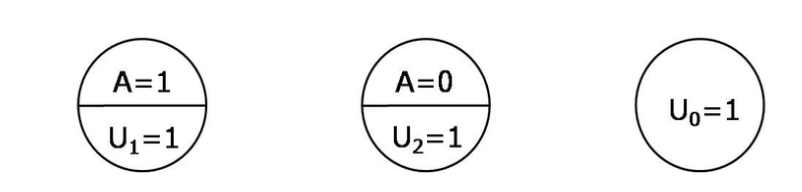 --- # Sufficient causes - 9 possible sufficient causes with treatment components A = 1 only, A = 0 only, E = 1 only, E = 0 only, A = 1 and E = 1, A = 1 and E = 0, A = 0 and E = 1, A = 0 and E = 0, and neither A nor E matter.